
The promise
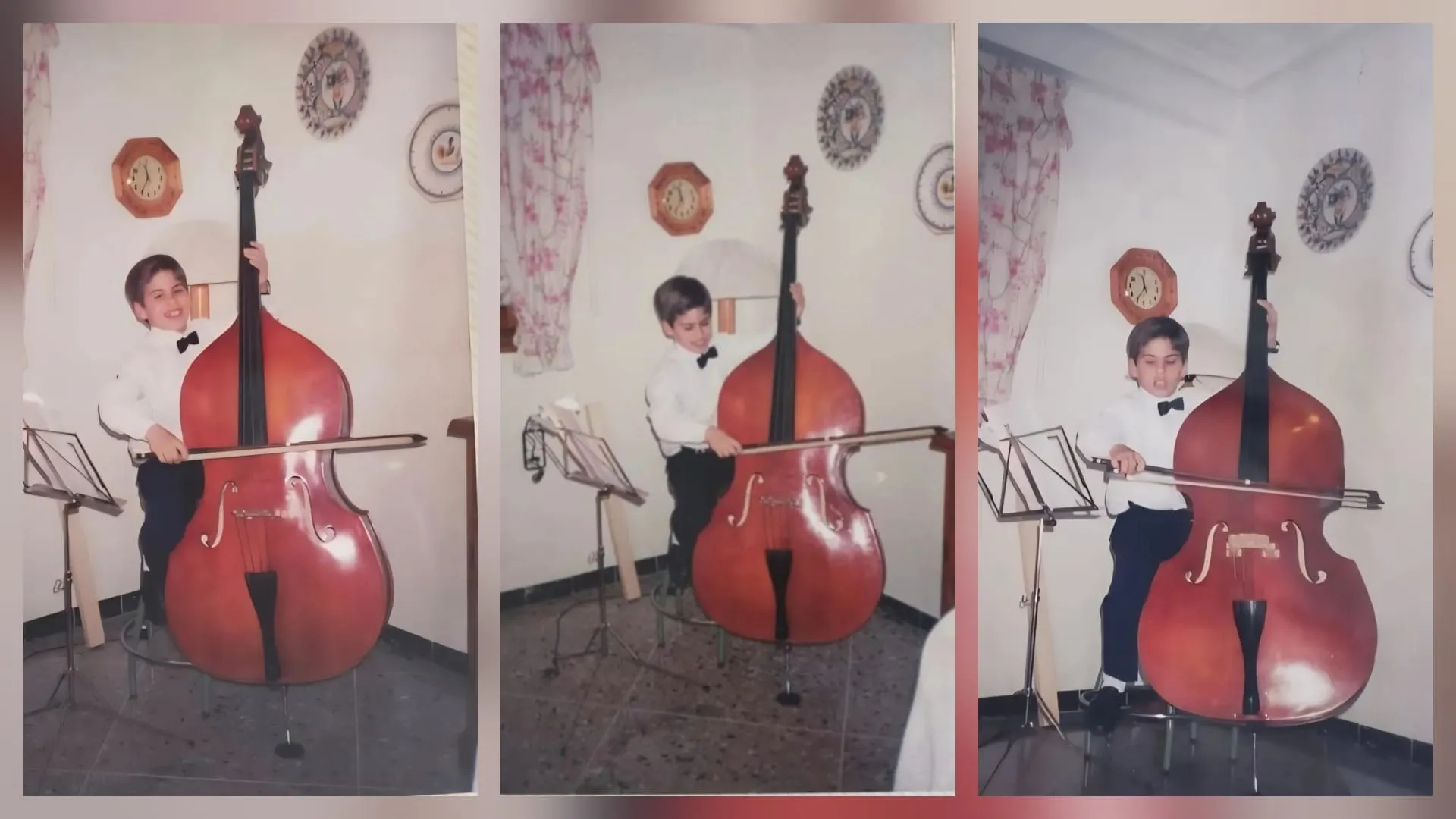
This is where I first started playing the double bass as a child. And this is where, at seven years old, I made a promise to myself.
I had fallen in love with an instrument that seemed to live in the shadows. While other instruments often occupied the spotlight, the double bass remained in the background, rarely recognised for the beauty, depth and power it brought to music.
Standing in this very room, I made a simple promise: one day, I would do everything I could to help people recognise the beauty of the double bass. At the time, I had no idea where that promise would lead.
The price of the promise
As the years passed, the double bass became much more than a childhood passion. It became part of my identity. I practised relentlessly, studied, performed, taught, and eventually built my professional life around the instrument I loved. Every rehearsal and every performance felt like a step towards fulfilling that promise.
But there was a cost. What began as occasional discomfort slowly became fatigue. Fatigue became pain. Pain became a constant companion.
Like many double bass players, I assumed this was simply part of the profession. I believed that if I worked harder, became stronger or improved my technique, the problem would eventually disappear. It didn’t. Instead, it grew. Year after year, my body adapted to the demands of the instrument until those adaptations themselves became part of the problem.
The breaking point
Eventually, the situation became impossible to ignore. The hardest part wasn’t the pain. The hardest part was that by then music was no longer just something I loved. It was how I earned my living.
The instrument that had given meaning to my life had also become the source of my greatest physical struggle. I felt trapped. To stop playing meant abandoning my profession. To continue playing meant reinforcing the very conditions that seemed to be causing the problem.
The question
For the first time, I began to question something I had always taken for granted.
What if the problem wasn't the musician? What if the problem was the system itself?
What if the way double bass players are expected to sit, stabilise and interact with the instrument has been forcing generations of musicians into unnecessary compensation? And perhaps most importantly: how can a musician recover if the act of playing continuously recreates the conditions that caused the problem in the first place?
That question changed everything.
From frustration to research
What followed was not a sudden invention. It was a long process of observation, experimentation and failure. I began studying posture, movement, biomechanics, instrument stability, ergonomics, and the relationship between the body and the double bass.
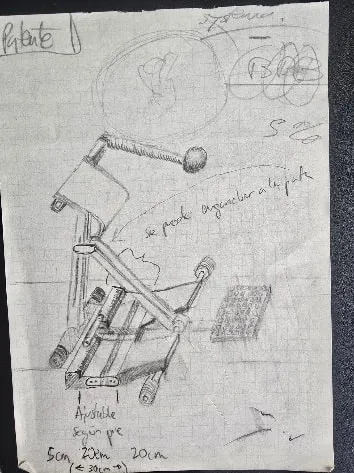
Sketches became prototypes. Prototypes became failures. Failures became lessons. Each attempt revealed another piece of the puzzle, and gradually a different vision emerged. The solution was not another accessory. It was not another chair. It was not another way of enduring the problem. It required rethinking the relationship between the musician, the instrument and the support system as a whole.
See the whole journey: sketches, homemade prototypes, design and concerts →
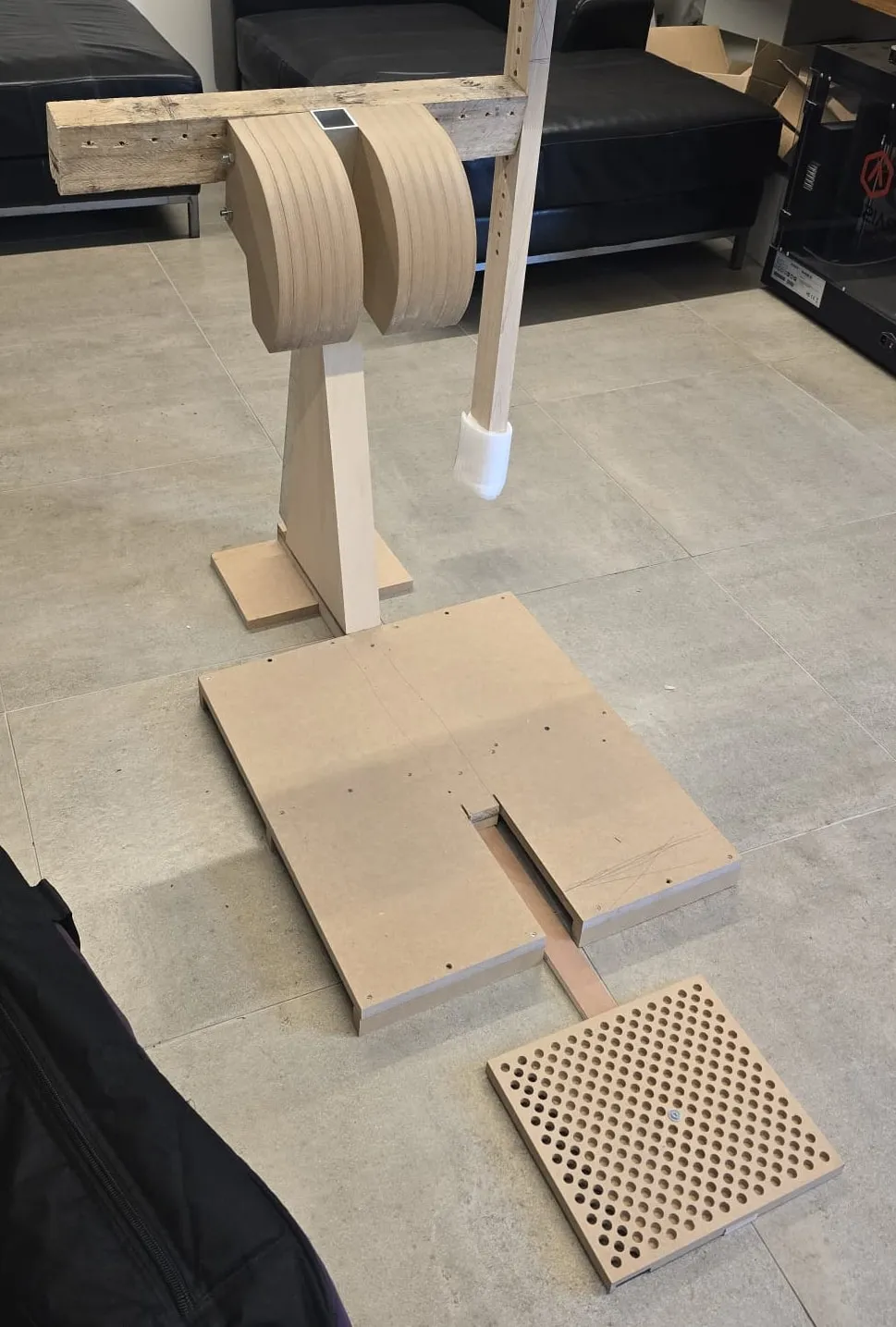
Trinity
That journey eventually became Trinity. Not a chair. Not a comfort product. Not a collection of accessories. But an attempt to create better conditions for double bass players, and to make musical excellence and human well-being work together rather than against one another.
In many ways, Trinity is the continuation of the promise made by that seven-year-old child. The mission has never changed: to help people recognise the beauty of the double bass.
Over time, however, I came to understand something deeper. The full beauty of the double bass can only emerge when the musician is no longer burdened by constant physical compensation. Every unnecessary effort spent stabilising the body is energy that cannot be devoted to listening, expression, communication and sound.
The most beautiful sound a double bass can produce is not limited by the instrument itself, but by the conditions in which the musician is asked to play it. When the weight of compensation remains on the player, part of that potential remains hidden. When that burden is reduced, more attention becomes available for artistry, expression and music.
Trinity exists to help transfer that weight away from the musician, creating the conditions in which both player and instrument can flourish together. Because the beauty of the double bass reaches its fullest expression when the musician is free to focus on what truly matters: music.
The harmony of the body is reflected in the beauty of the music.